Posted by Angus Cameron in School of Business Blog on January 28, 2015
Amidst the occasionally apocalyptic commentaries on the likely consequences of Greece’s recent general election results, Angus Cameron, the Deputy Director of School, drives a wedge between the potential loss of the Euro and the historical ‘project’ of Europe Syriza’s victory has stimulated renewed speculation that Greece might withdraw from the Euro, putting the entire European […]
Posted in Uncategorized | Tagged Bureaucracy, Crisis, Democracy, Economic Crisis, Election, EU, Euro, Financial Crisis, Financialization, Greece, Grexit, History, Identity, Nationalism, Politics, Refuge, Syriza |
Posted by Simon Lilley in School of Business Blog on January 22, 2015
Head of School, Professor Simon Lilley and Director of Research, Professor Martin Parker, discuss the problems of comparing apples, pears and potatoes, in the ranking of business and management research. We live in a world of rankings nowadays. There are league tables for schools, washing machines and doctor’s surgeries. In a complicated world, it’s not […]
Posted in Uncategorized | Tagged Accountability, Accounting, Auditing, Competition, Competitiveness, Higher Education, Management Education, Management Pedagogy, PR, Public Debate, Public Sector, Publishing, Rankings, Research, Research Ethics, Research Excellence Framework, Research Methodology, Spin |
Posted by Stephen Dunne in School of Business Blog on January 14, 2015
Lecturer in Social Theory and Consumption at the School, Stephen Dunne, attempts to renew a recent academic argument through a more accessible medium Social scientists engage in debates which matter to people other than themselves. Very often, however, those potentially publicly meaningful debates preside within academic journals which regularly assume a lot of terminological familiarity and disposable […]
Posted in Uncategorized | Tagged Academia, Academic Freedom, Academic Journals, Blogging, Centre for Philosophy and Political Economy (CPPE), Critique, Debate, Jargon, Leicester Sociology, Michel Foucault, Norbert Elias, Open Access, Open Access Publishing, Pay Wall, Philosophy, Political Philosophy, Public Debate, Publishing, Rhetoric, Social Science, Sociology, The Civilising Process |
Posted by Sarah Robinson in School of Business Blog on December 23, 2014
Senior Lecturers in Organisation Studies, Sarah Robinson and Elke Weik, get us in the seasonal spirit: Cheers! We are both wine lovers and organisational researchers, curious about the factors underpinning the growing success of English wine. How, we are interested in finding out, in the short space of 40 years, has this industry developed from […]
Posted in Uncategorized | Tagged Agriculture, Climate Change, Consumer Culture, Consumption, england, englishness, Entrepreneurs, Festive, Hospitality, Leisure Industry, Organisation Studies, Organisational Learning, Qualitative Research, Weather, Wine
Posted by Martin Quinn in School of Business Blog on December 17, 2014
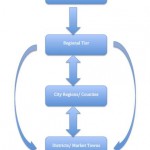
Lecturer in Regional Development at the School Martin Quinn outlines his proposal for a new regional development infrastructure The recent referendum on Scottish independence has plugged ‘the West Lothian Question’ back into the political mainstream. Tam Dayell’s original concern in raising this question was with parliamentary representation whereas today the controversy is over parliamentary devolution. […]
Posted in Uncategorized | Tagged British Law, Catalyst Corby, Conservative Party, Democracy, Deregulation, East Midlands, East Midlands Development Agency, englishness, HS2, Local Enterprise Partnerships, Parliament, Politics, Public Private Partnerships, Regional Development, Regional Development Agencies, Regional Development Agency, Regions, Resources, Scotland, Scottish Independence, Slack Resources, West Lothian Question
Posted by Jo B in School of Business Blog on December 10, 2014
Deputy Head of School Professor Jo Brewis briefly outlines details of the thematic streams awaiting delegates of next summer’s 9th Critical Management Studies (CMS) Conference Martin Parker has already explained why Leicester’s management academics have regularly had the cheek to criticize the pervasiveness of managerialism. Managerialism, he argued, should not be seen as the natural […]
Posted in Uncategorized | Tagged 4th Wave Feminism, 9th CMS Conference, Accounting, Alternative Organisation, Alternatives, Artistic Production, Borders, Branding, Catastrophe, Civil Society, Cooperatives, Critical Friendship, Critical Management Studies, Cultural Animation, Cultural Governance, Culture, David Erdal, Eastern Europe, Ecological Accounting, Economic Education, Elites, Employment Relations, Entrepreneurs, Environmental Accounting, Environmentalism, Feminism, Finance, Financialization, Health Management, Heterodox, Industrial Relations, International Development, Jo Brewis, Management Education, Managerialism, Managers, Marketing, Martin Parker, Migration, Mobility, Neoliberalism, Not for Profit, Oliver James, Organisation Studies, Place Branding, Place Marketing, Political Economy, Principles of Responsible Management Education, Professions, Regional Governance, Social Studies of Finance (SSF), Stakeholder Theory, Stakeholders, The Arts, Unemployment, Vandana Shiva, VIDA, Voluntary Sector
Posted by Richard Courtney in School of Business Blog on December 3, 2014
On the day of 2014’s Autumn Statement, Richard Courtney, Lecturer in Employment Studies at the School, opposes the ideology of minimum taxation I used to get excited by budget statements. Listening to and subsequently dissecting how the government’s representatives say they are ‘balancing the books’ still reminds me of why I initially became a sociologist. […]
Posted in Uncategorized | Tagged Arts Council, August Statement, Austerity, Budget, Financial Crisis, George Osborne, Handbag Economics, Keynesianism, Mary Mellor, Money, Money Supply, Neoliberalism, Paul Krugman, Politics, Protectionism, Richard Courtney, Sociology, Tax, Taxation |
Posted by Fabian Frenzel in School of Business Blog on November 26, 2014
This week the School launches its Principles of Responsible Management Education (PRME) student working group. Fabian Frenzel, Lecturer in the Political Economy of Organisation, explains why Founded in 2007, PRME is a UN led initiative which aims to redress the demonstrable lack of care and responsibility taken by managers of increasingly powerful global corporations. It […]
Posted in Uncategorized | Tagged Anti-Corporate, Critical Management Studies, Critique, Environmentalism, Ethics, Fair Pay, Management Education, Management Pedagogy, Neoliberalism, Politics, Poverty, Principles of Responsible Management Education, PRME, Self-Regulation, Self-Reporting, Social Movements, Student Centred Learning, Sustainability, Sustainability Reporting, Tax Evasion, tourism, UN, UN Global Compact, United Nations, University |

Posted by Paul Brook in School of Business Blog on November 19, 2014
In the age of much austerity and few alternatives, Paul Brook, Senior Lecturer in the Sociology of Work and Employment at the School, makes a renewed claim for a politics of labour mobilisation Not long after Occupy Wall Street re-injected the idea of class (‘We are the 99%’) into America’s political consciousness, fast food workers […]
Posted in Uncategorized | Tagged Arun Gupta, Barack Obama, Burger King, Civil Disobedience, Class, Consumerism, Dunkin' Donuts, Employment Relations, Fast Food, Fight for 15, Flexibility, Ideology, Industrial Relations, Labour, Labour Market, Labour Mobilisation, Living Wage, McDonalds, Mobilisation, Neoliberalism, Occupy, Occupy Wall Street, Part-Time Work, Paul Brook, Pizza Hut, Politics, Poverty, Private Sector, SEIU, Sit-Down Strikes, Strike Action, Struggle, Taco Bell, Trade Unionism, UFCW, Union Rights, Walmart, Work and Employment

Posted by Rutvica Andrijasevic in School of Business Blog on November 10, 2014
Rutvica Andrijasevic, Lecturer in Employment Studies at the School, overviews some provisional findings from the research she has been doing into the ongoing protest While ‘Occupy Central’ has become the umbrella term applied to Hong Kong’s ongoing mobilisations, three less heeded groups are also playing very active roles within it. Scholarism, founded by Joshua […]
Posted in Uncategorized | Tagged Admiralty, Barricades, Benny Tau, Causeway Bay, Chan Kin, Chu Yiu, Citizenship, Consumer Culture, Consumerism, Cyber-Politics, Debate, Democracy, Electoral Reform, Ethnography, Federation of Students, Hong Kong, Joshua Wong, Kowloon, Mobilisation, Mong Kok, Occupy, Occupy Central, Occupy Central with Love and Peace, Occupy Hong Kong, Police, Politics, Poverty, Protest, Protest Camps, Public Debate, Scholarism, Sociology, Solidarity, Sovereignty, Student Protest, surveillance, Tiananmen Square |

Recent Comments