
The East Midlands Oral History Archive contains many thousands of recordings, almost all of which take the form of a story, whether as an oral history interview, a radio programme, a speech, or a song (our wildlife collection may be the only exception). As part of Storytelling week, 2026, this blog takes music as its theme and looks at recordings in the EMOHA that feature music, and then some of the other local history material available about music.

Some of the earliest recordings come from a collection of sound recordings from the Record Office for Leicestershire, Leicester and Rutland, 1953-1986. One of our favourites is a collection of May Day songs recorded in 1960 as part of a Women’s Institute project. This is described in this May Day Memories blog post. This collection also includes a performance of The Apple Tree by Mr English of Braunstone. This song was passed down to him from his grandfather via his father, and appeared in books of hymns and verse as early as 1829. The recording was made in January 1959 at Leicester Museum when Mr English was 79 years old. Folk singers were also recorded by the Leicester Tape Club in the 1950s, but we suspect the recording of Mr English is one of the earliest local recordings of folk music. Listen to this song at the bottom of this EMOHA blog from 2020.
Staying with folk music, we have a digital copy of the record made by members of the Leicester Folk Club in the 1960s, ‘Some Folk in Leicester’ (although it isn’t on our catalogue). This is 15 songs by the people involved with Leicester’s first folk clubs, such as Harvey Tucker, Mark Newman, and the Couriers. In the 2000s we recorded interviews with three of these early musicians. These contributed to the Popular Music page of the Post-War Leicester 1945-1962 website, along with memories of the big bands of the 1940s and ‘50s, and early skiffle and Rock and Roll.
From Lincolnshire, the Grantham Radio Collection features 11 interviews with people involved in the early Grantham Rock and Roll and Skiffle scene from the 1950s. Local lad Roy Taylor went on to become very well known as Vince Eager.
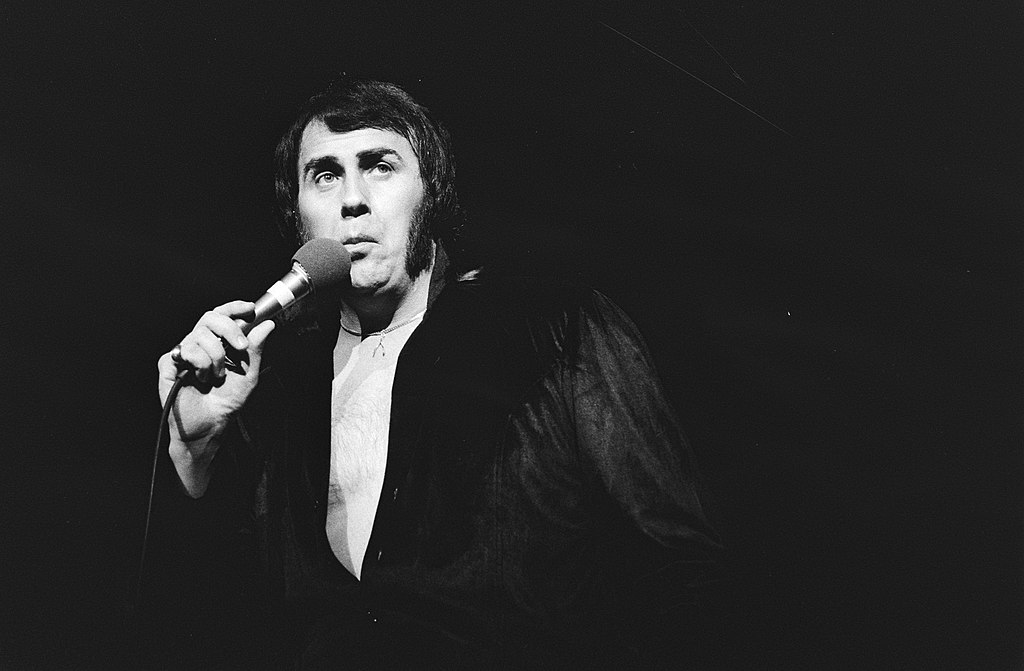
In the 1980s the Leicester Oral History Archive recorded memories of the music halls and theatres in Leicester. In the 1990s, the Community History Unit recorded memories of the early days of Indian classical dance and music in Leicester. The Centre for Indian Classical Dance (CICD) has recorded many other oral histories since then.
Choirs feature in two collections. ‘Singing for Our Lives’ comprises 42 interviews with members of various street choirs across the UK, while the Deep Roots Tall Treets ‘Generations’ project (uncatalogued at present) encouraged people in Corby, Northamptonshire to write songs based on their memories and experiences.
There is one major music collection in the Archive, which is the Leicester Folk Music Collection. This is a series of BBC Radio Leicester programmes recorded from 1973-1991 featuring local and nationally known performers. Other Radio Leicester music shows include a few episodes of the Herdle White show, as well as recordings of local orchestral music and brass bands that have yet to be digitised.
In 2013, Andrew ‘Skatz’ Scattergood, recorded people at venues across Leicestershire for the ‘Father Used to Say’ project. These interviews inspired him to write songs for a one man show of the same name. Find out more about the show and the songs here.
There are many interviews with individuals for whom music has featured in their lives. One such interview is with John ‘Jelly’ Nixon, a local musician and ‘face’ on the Mod scene of the 1960s. This recording went on to inspire a Mod exhibition at Leicester Museum, Shaping a Generation, which then fed into the Punk exhibition, Rage and Revolution, also at the Museum. We have created a playlist of Leicester music from the period here on YouTube. The recording with John Nixon also contributed to the film ‘Moving in the Shadows’, about the creative people and music scene of 1960s Leicester.
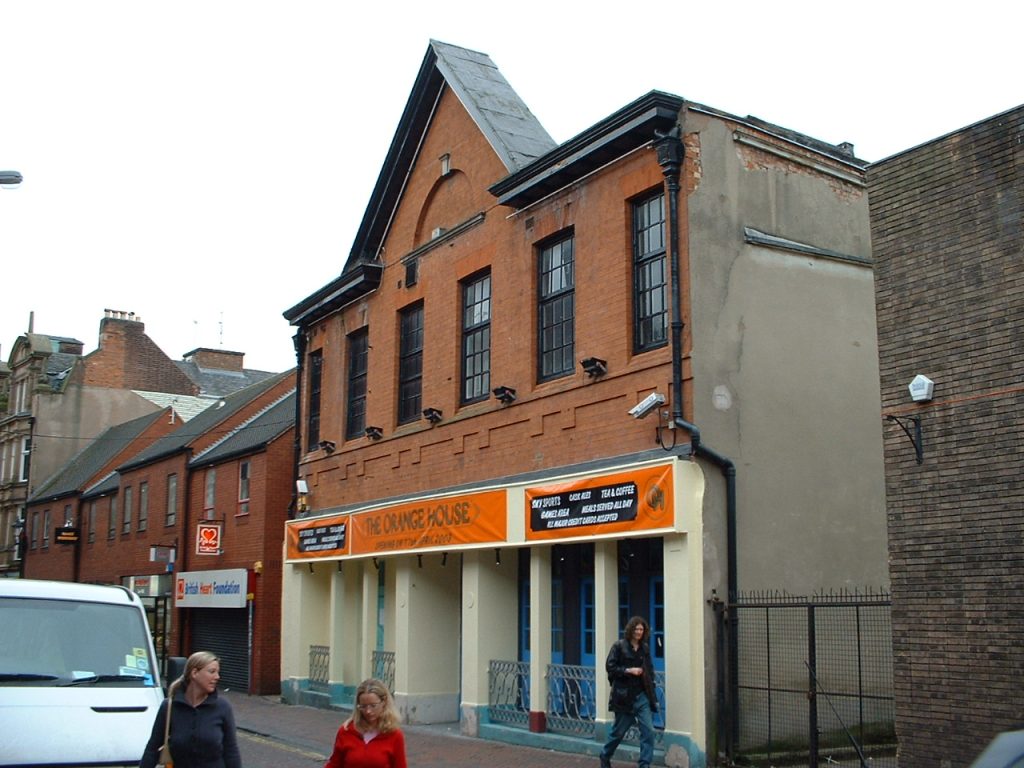
The former Il Rondo, one of the most memorable clubs in Leicester, particularly in the 1960s and ’70s. In 2003 it was called The Orange House (credit: Colin Hyde).
One memorable moment was when John Douglas suddenly burst into song while we were filming his memories of Corby in 2012. John had been performing ‘It’s Corby for Me’ for many years and now you can hear it at the start and end of this video on YouTube.
Outside of EMOHA, 2FunkyArts have done a great job of recording the history of Black music in Leicester with their film, Spectrum. They have also documented Black music shops across the UK in The Record Store & Black Music: England’s Tastemakers.
This is far from everything in the EMOHA, but it gives you a flavour of the sorts of music-related recordings we hold. For information about what is in the EMOHA, search our catalogue here. Full length oral history recordings are on Special Collections online, and there is more information about local pop and folk music in the Post War Leicester exhibition and on this LAHS blog.

 Subscribe to Colin Hyde's posts