
Guest post written by Yi-Chen Su and Yongqin Huang, who are completing an eight week placement in Archives & Special Collections as part of their MA in Art Museum and Gallery Studies .
Yongqin Huang
Hello, I’m Yongqin Huang. Weeks three and four of placement were a bit hectic for us, but thankfully, we performed quite well.
During week three, we primarily focused on exhibition promotion. For example, we recorded our daily work and edited it into a short video, which was quite fun. While this wasn’t my first time editing a video, filming and documenting the scenes and content I encounter every day was still quite enjoyable. The video was posted on the library’s Instagram account and received a few likes, which was incredibly satisfying. Besides making the short videos, I also created a series of posters for our exhibition. We’ll eventually select four to display on the wall above our display cases. While these posters aren’t final yet, I hope they’ll be well-received.
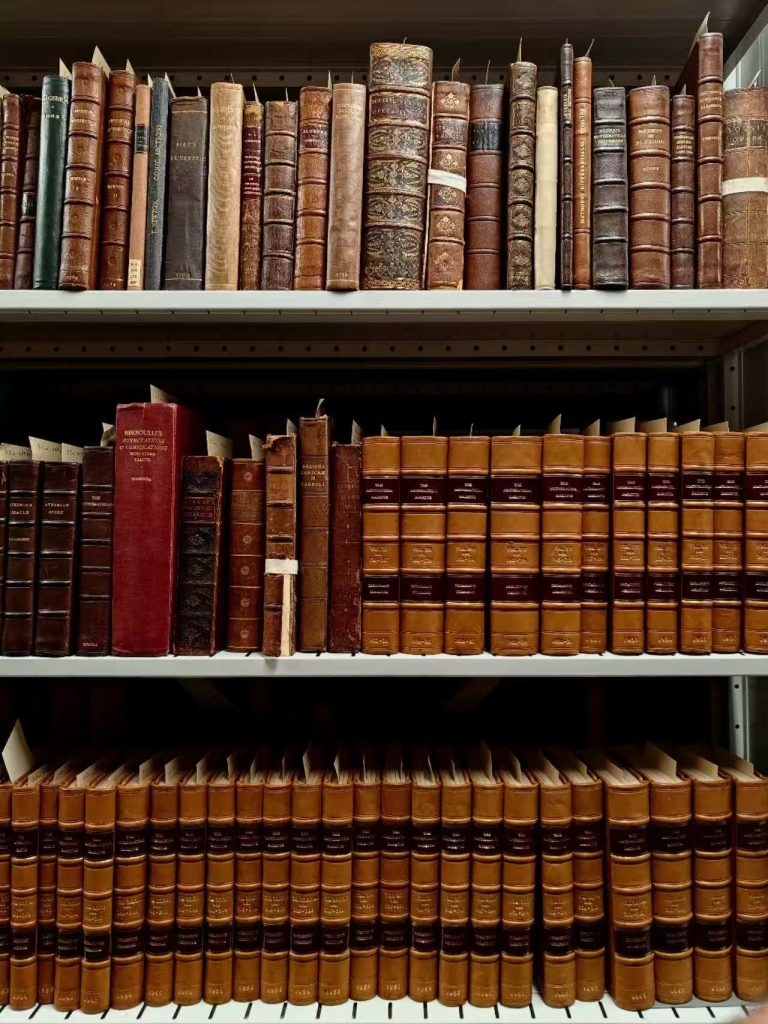
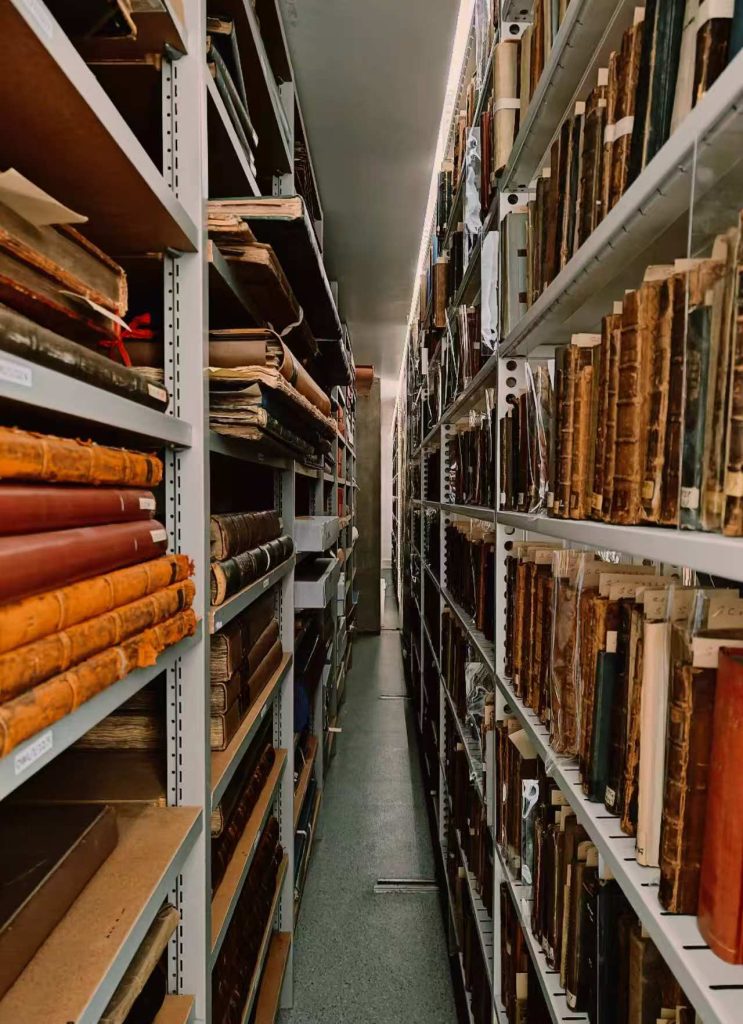
The rare book store
Week four was arguably the busiest so far. On Monday morning, a presentation given by Corinne Lambert (Metadata Specialist for the Library) on rare book cataloguing addressed some of our concerns regarding information formatting when writing explanatory texts.
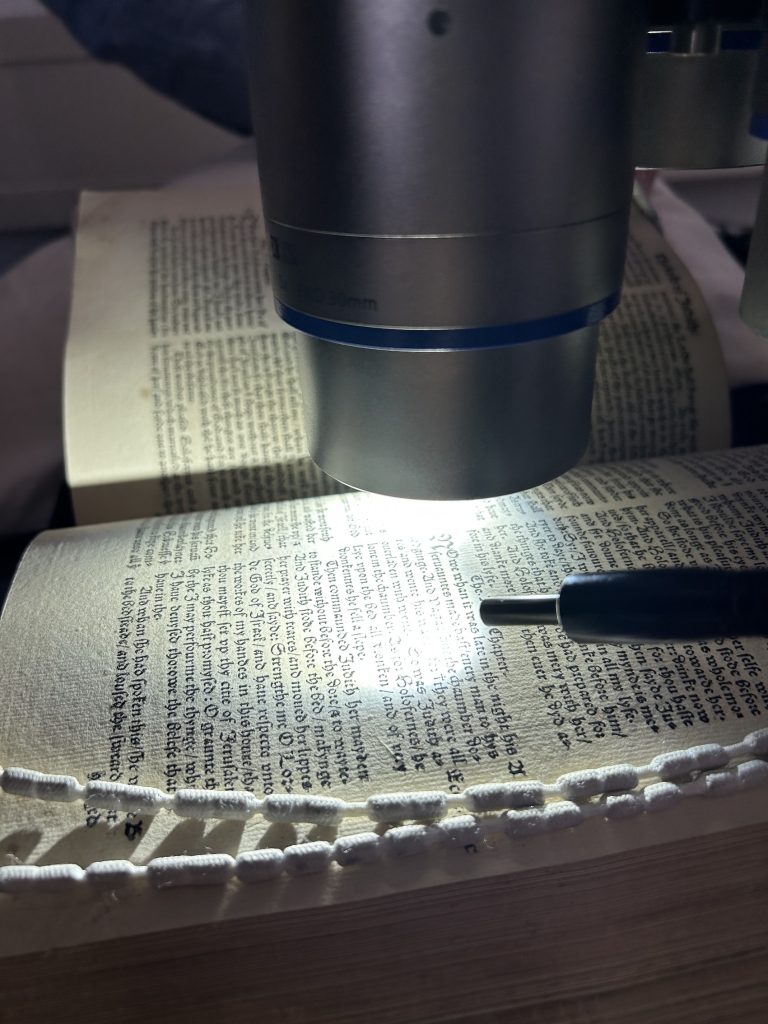
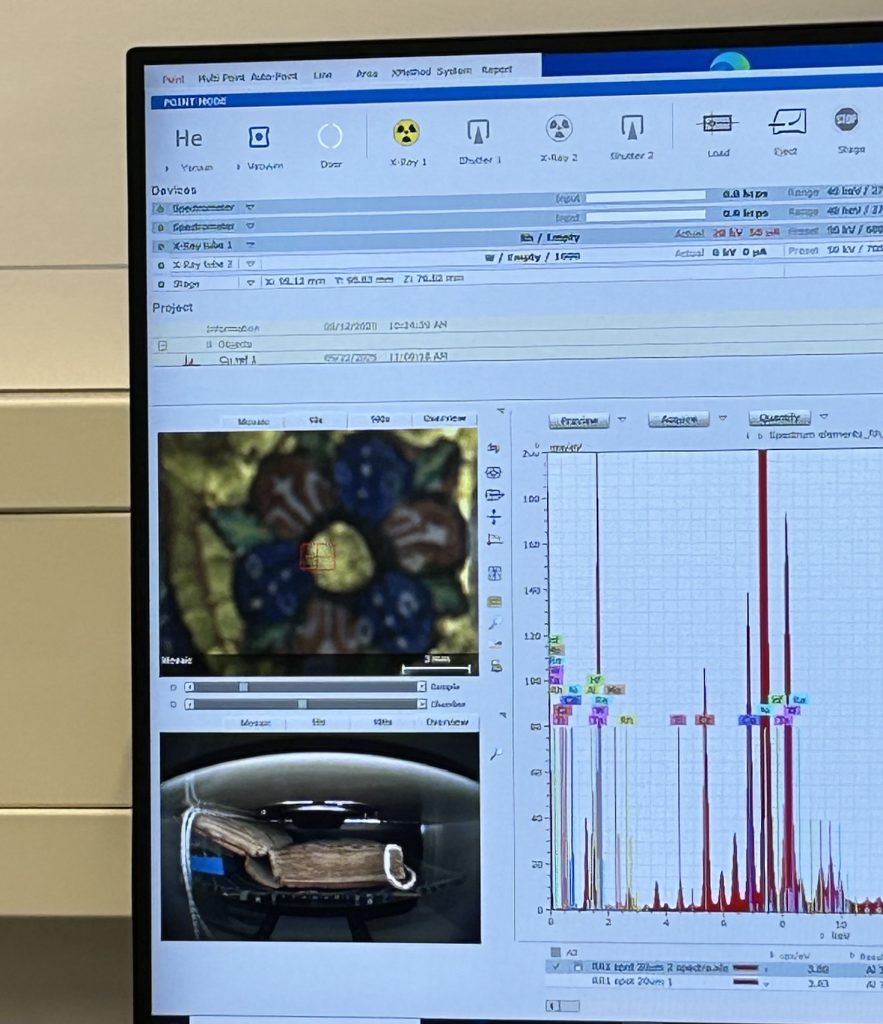
Tuesday and Thursday marked the long-awaited laboratory testing, where we used microscopes to examine the fine structure of rare book paper, providing information that would help us determine the type of paper used in our explanatory texts. Furthermore, we analysed the chemical composition of the inks and pigments used in rare books; these results may help us build our knowledge of pigment usage across different eras and genres. Furthermore, on Thursday afternoon, we completed the digital scanning of all the books and images involved in the exhibition.
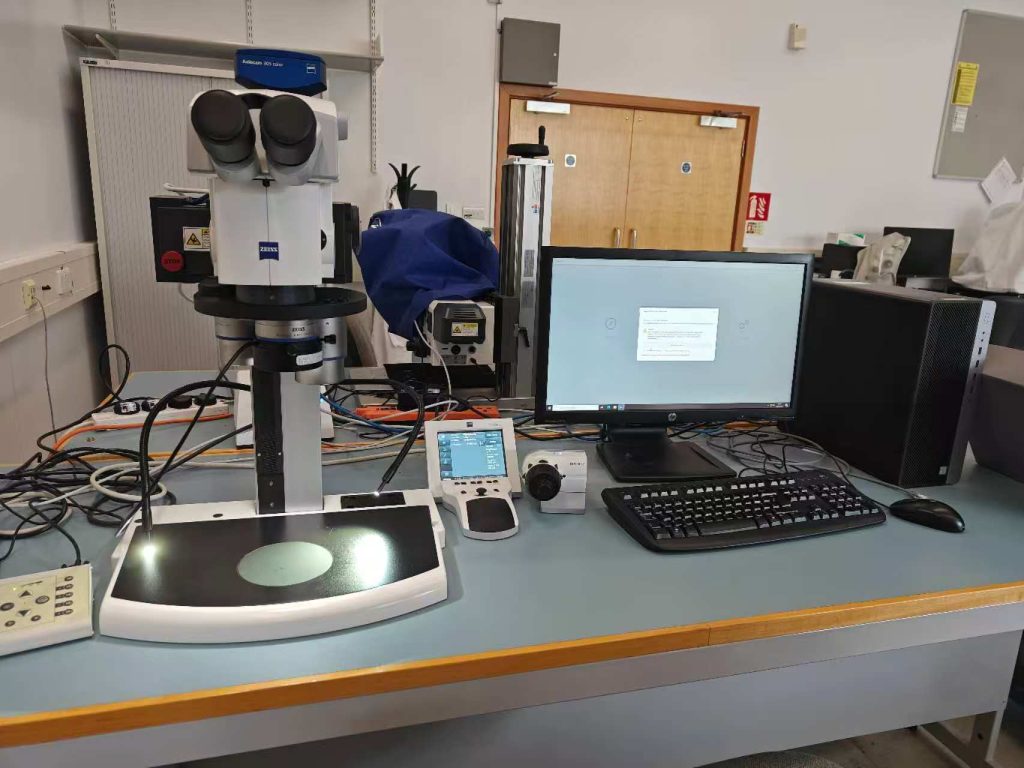
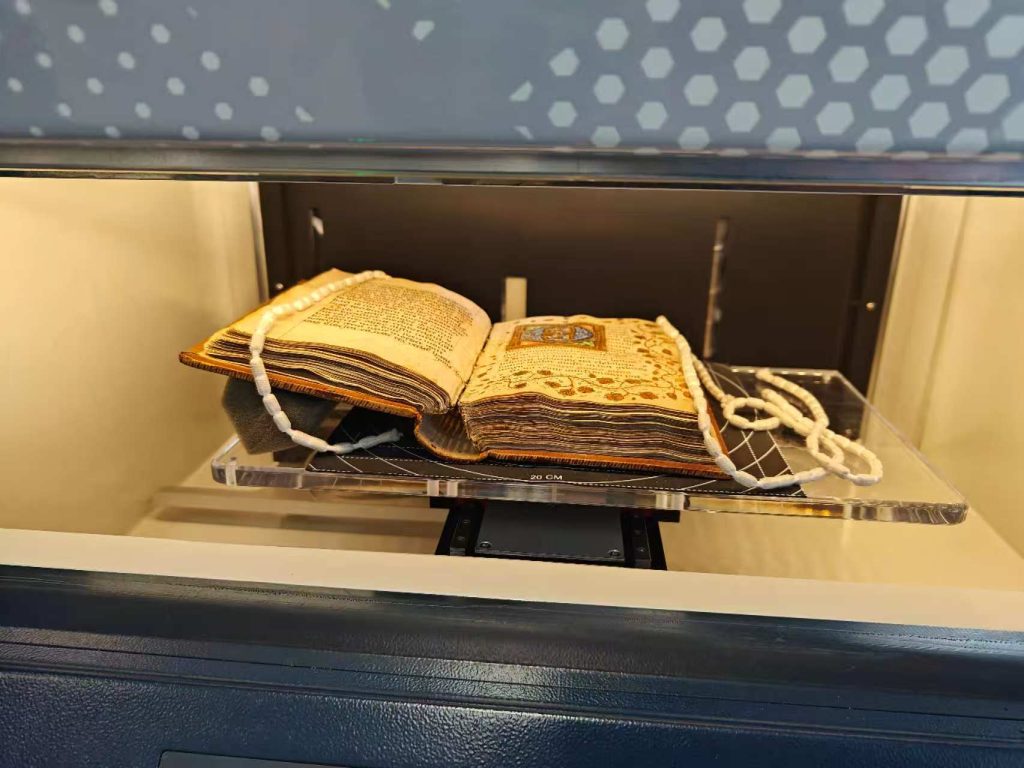
Analysing materials in the Lab
Yi-Chen
In the third week, we made a video reel for the Library’s Instagram account. Our supervisor gave us an introduction to Canva and we created a placement diary.
In this reel, we tried to show some photos and videos which are related to some moments from our time in Archives and Special Collections. Through the demonstration from another supervisor, we also realized the process of using the XRF scanner to detect the chemical elements of the selected books for the first time. This process allowed us to think what kinds of specific parts of covers or inside pages in books we would like to detect and the chemical elements that were detected might be related to what kinds of materials.
In the beginning of the fourth week, we had a basic introduction that is related to the cataloguing of rare books from one of our library staff. The introduction of the cataloguing and the response to our questions helped us to understand the information of the books for our exhibition.
Also this week, we were excited to go to the Archaeology and Ancient History lab for detecting the paper and pigment of the selected books. What is most amazing is that under the light microscope, the subtle structures of these books can be revealed clearly. Moreover, the detections are very important for our exhibition, because it can tell us the inference of the paper materials and the pigment chemicals.
Finally, the last impressive thing in this week is that we used a set of specialized equipment to shoot photos for our exhibition items for the digital display. So, I am looking forward to both our physical exhibition and our online exhibition!

 Subscribe to Sarah Wood's posts