
Guest post written by Yi-Chen Su and Yongqin Huang, who are completing an eight week placement in Archives & Special Collections as part of their MA in Art Museum and Gallery Studies .
Yongqin Huang
For our placement in Special Collections, my classmate and I were asked to complete an exhibition about the material culture of books. As a post-graduate student of Art Museum and Gallery Studies, such work is undoubtedly highly matched with our profession, so I was full of expectations for future work before starting.
As I expected, in the first week of work, my classmate and I determined the theme, structure, general framework and exhibition logic of the exhibition, and came into contact with a large number of rare books held in Special Collections. Among them, there are many medieval manuscripts that are old, interesting, or have unexpected materials and binding methods. We screened and preliminarily chose the items we needed in the exhibition. This process has a rigorous workflow, such as we created a table to summarize the information of these exhibits, etc., but it is also full of fun. For example, one of the ancient manuscripts is MS 289 an ‘[Arabic manuscript containing miscellaneous items of magical content]’. Figures 1 and 2 are examples of the front and middle pages of the manuscript. The reason why ancient books are so fascinating and fascinate so many people is that they are always full of mysteries like this.
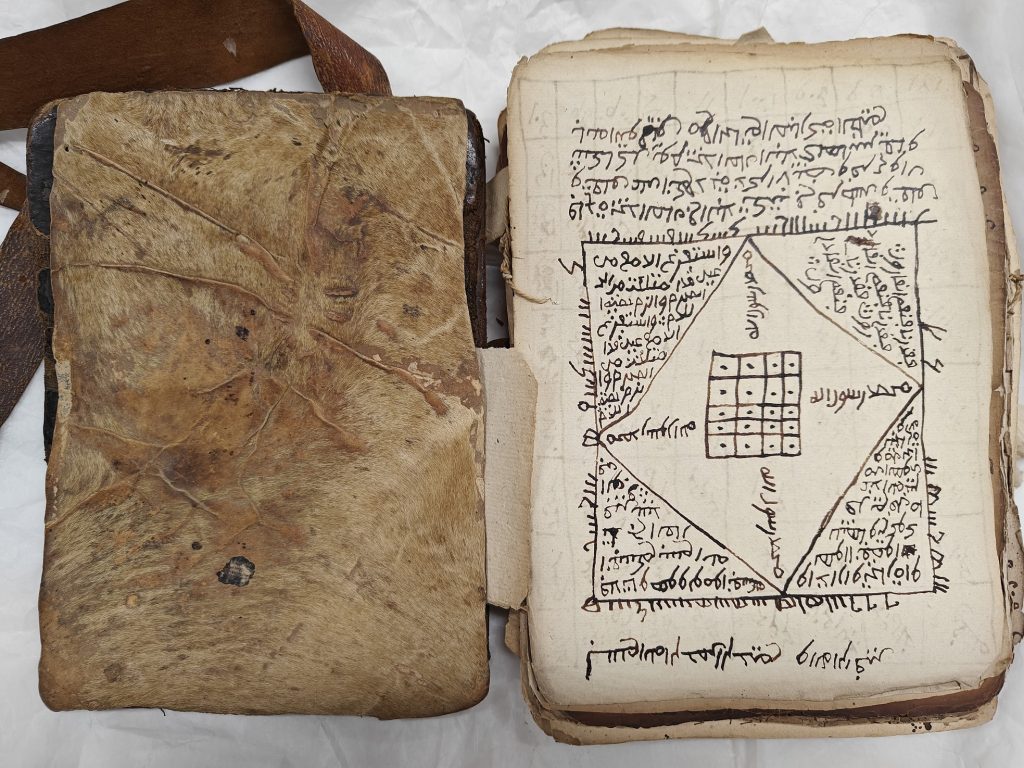
Shelfmark: MS 289
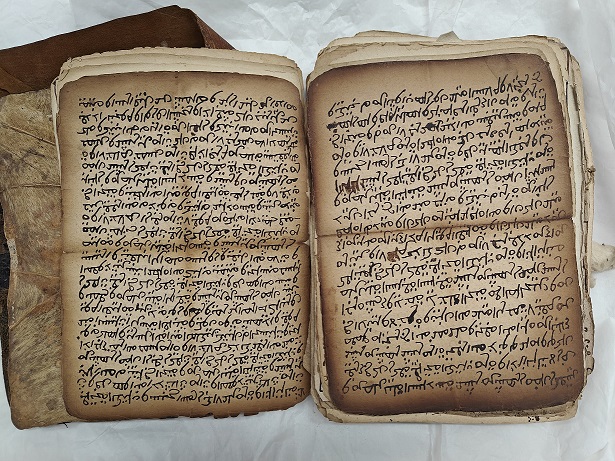
Shelfmark: MS 289
After entering the second week, we began to read a lot of literature to ensure that the sources of text or other information in our exhibition were authentic and reliable. Since we determined the structure of the exhibition in the previous week, we collected some literature on the production process, materials and processes of each structural part of the book. In addition to the general introduction in the first part, the structure of the entire exhibition also includes three major parts: paper production, book cover binding, and pigment ink raw materials. During this week, our main work was to study the paper production process and book cover binding, and preliminarily wrote an interpretation text about the book cover exhibits based on the information of the exhibits we selected in the library catalogue. After learning about the process involved in paper production and book binding, we summarised some more concise and easy-to-understand steps so that we can show the audience how these fascinating paper books are made through the interactive touch screen located next to the exhibition display cases.
Yi-Chen Su
In the first week of the placement, the most exciting thing was that we selected our items from Special Collections to be displayed in the exhibition.
Our exhibition focuses on the cover, the paper and the ink pigments of a book. For our display we chose books which have special covers, noteworthy papers or appealing pigments. In the end, we temporarily chose 7 items for the showcase that stand for the section of the cover and decided the 5 items for the showcase which stand for the section of the paper. We then selected some books to be the analysed for traces of Arsenic, and we will be very excited about the analysed outcomes. In these processes, I found that the foundational knowledge of the materials of a book is gradually deeper in my cognition. For example, goat skin can be used for the cover of a book and vellum or cloth can be used for the paper of a book.
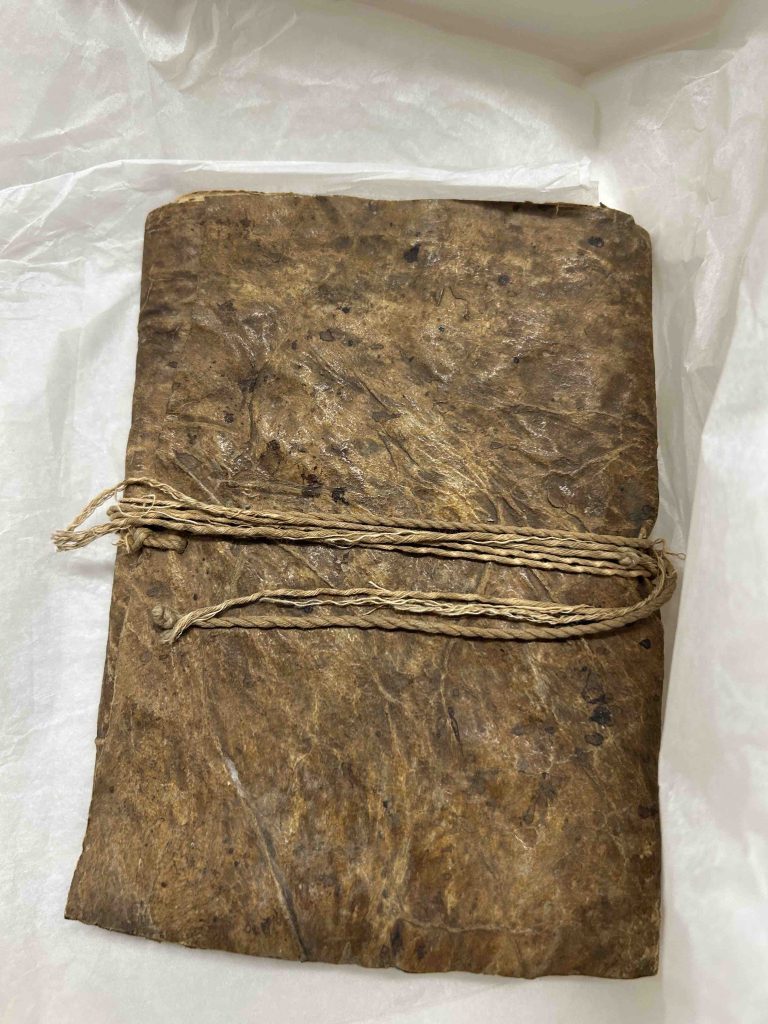
Shelfmark: MS 284
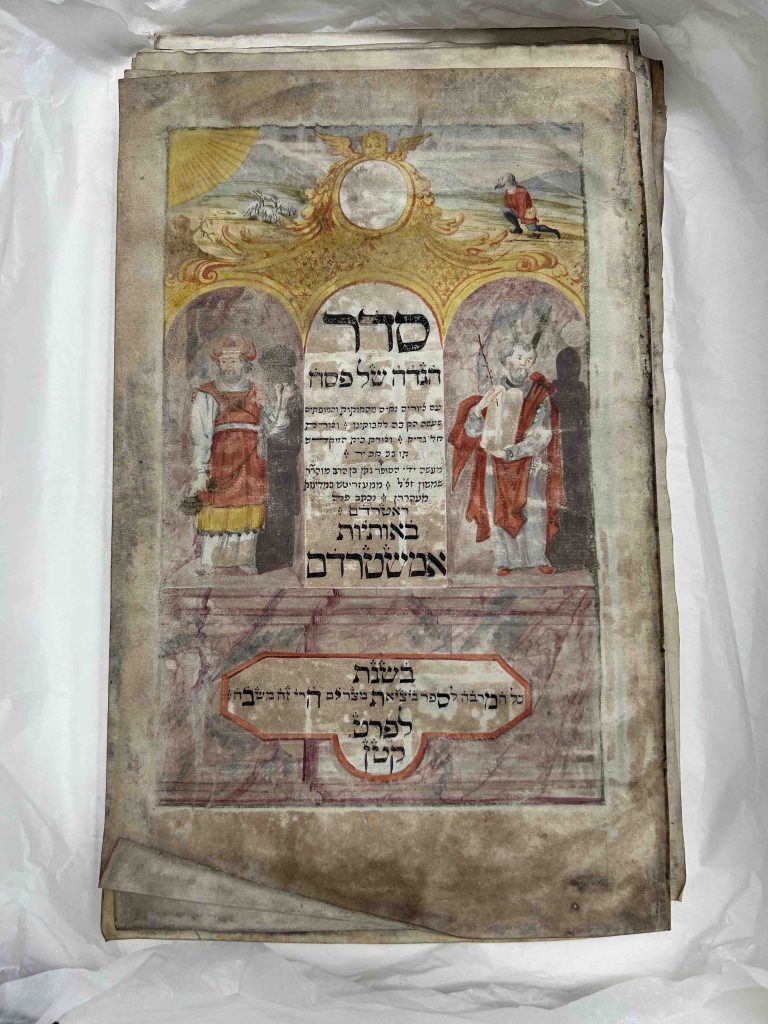
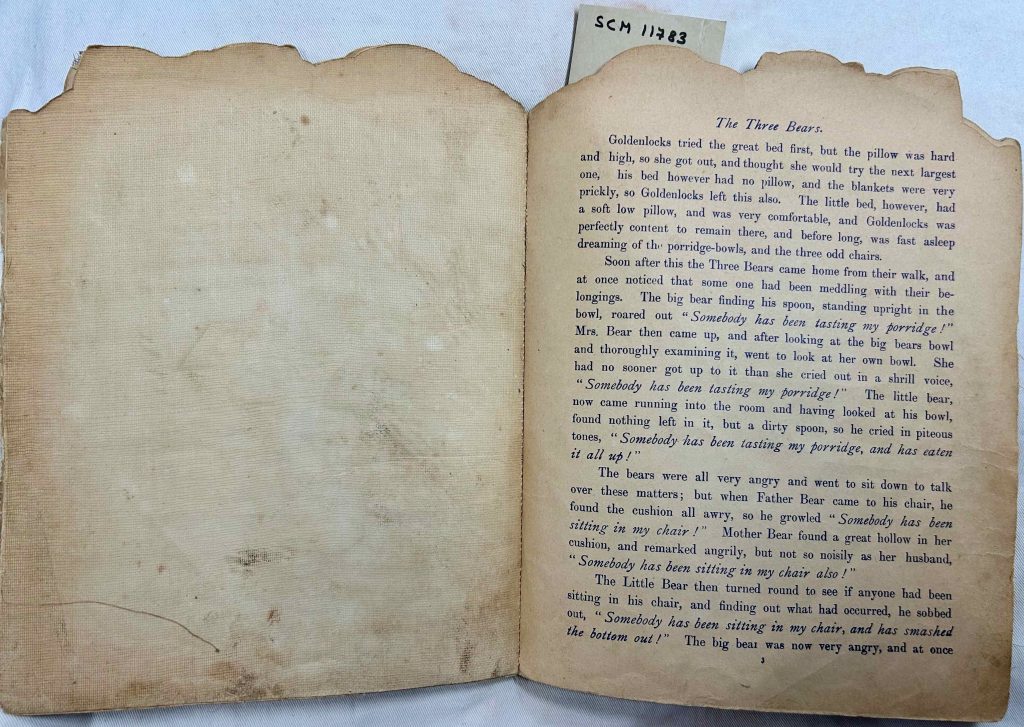
Shelfmark: SCM 11783

 Subscribe to Sarah Wood's posts